
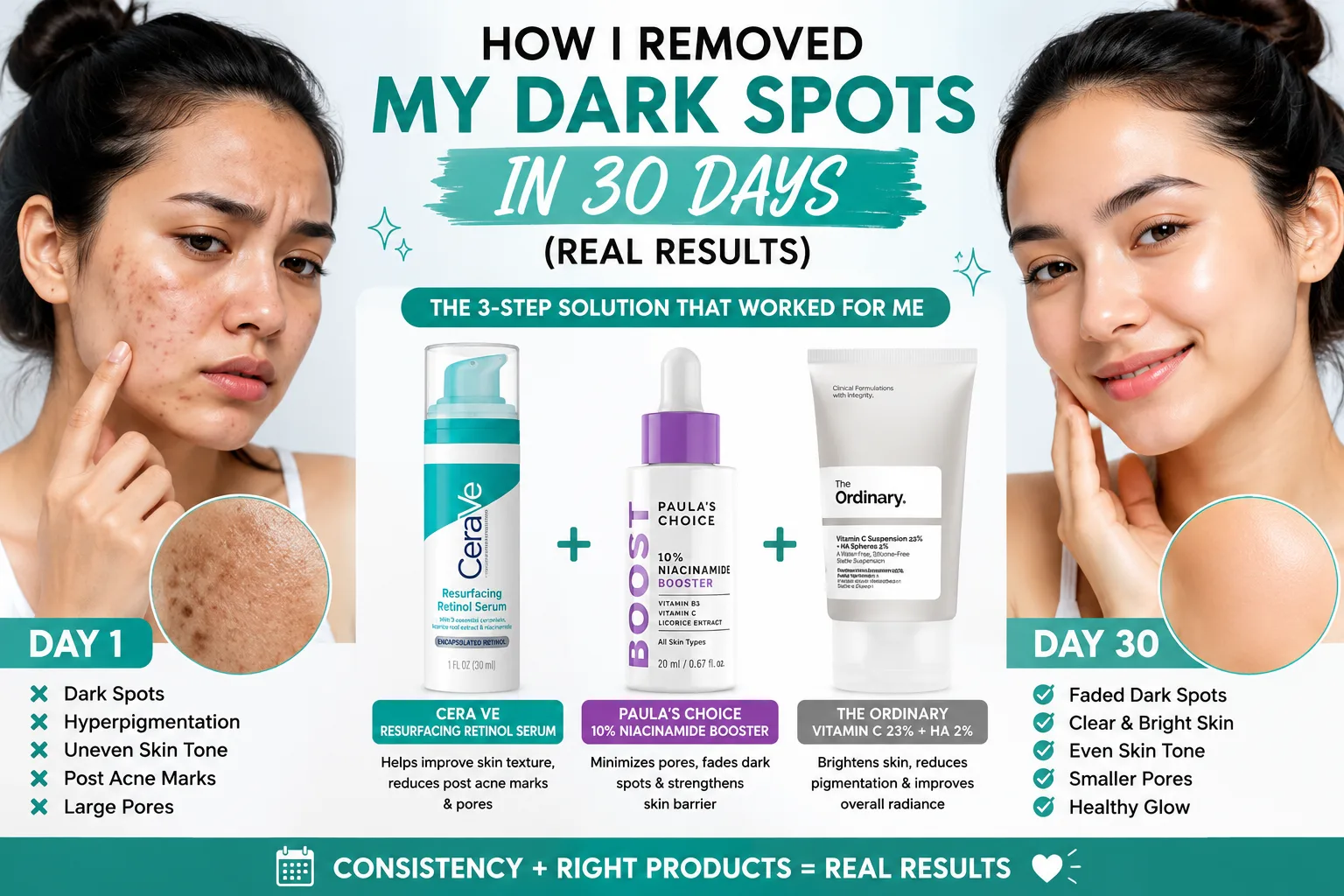
How To Fade Dark Spots: My 30-Days Skincare Routine?
Three months ago, I caught my reflection in a car window and didn’t recognize myself.
Not in some poetic, self-discovery way. I literally couldn’t reconcile the person staring back with who I thought I was. Dark spots peppered my cheeks like I’d pressed coffee grounds against my skin. Post-acne marks from a stressful month had settled in and made themselves permanent. And the hyperpigmentation above my upper lip? Let’s just say I’d gotten very good at strategic selfie angles.
I’d been a beauty blogger for ten years. Ten years of testing products, interviewing dermatologists, building a community of readers who trusted my advice. And yet I’d been hiding behind concealer and hoping my skin would just… fix itself.
Here’s the thing about dark spots: they don’t fix themselves. They settle in. They darken with sun exposure. And They become the thing you see first when you look in the mirror.
I used to think fading hyperpigmentation required expensive laser treatments or prescription creams that would destroy my moisture barrier. I’d tried a few “brightening” serums that did nothing. I’d given up and accepted that this was just my skin now.
That car window reflection was my turning point.
Over the next 30 days, I committed to a targeted routine based on everything I’d learned from dermatologists, research, and yes, my own past mistakes. I documented everything. I took photos (that I almost didn’t share). And slowly—frustratingly slowly at first—my dark spots started to fade.
Not disappear overnight. Not magically erase. But genuinely, noticeably fade to the point where I now leave the house without foundation.
This is exactly how to fade dark spots using the routine that worked for me. No miracles promised. Just a realistic, affordable approach that respects your skin barrier while actually targeting hyperpigmentation.

What Is “Fading Dark Spots” Really? How To Fade Dark Spots?
When we talk about how to fade dark spots, we’re really talking about interrupting your skin’s melanin production process and speeding up cell turnover.
Think of it like this: your skin produces melanin (pigment) to protect itself. When you get a pimple, sun exposure, or any inflammation, your skin sometimes overproduces melanin in that spot. The result? A dark mark that lingers long after the original issue healed.
Hyperpigmentation isn’t one thing. There’s post-inflammatory hyperpigmentation (PIH) from acne or irritation. There’s melasma, often hormone-related. And There’s sun damage that shows up years later. Each type responds slightly differently to treatment Aad +1.
Fading these spots isn’t about bleaching your skin or stripping away layers. It’s about calming the overproduction signal, protecting against new damage, and gently encouraging fresh, evenly-pigmented skin to surface.
This matters because the wrong approach—harsh acids, impatient layering, skipping sunscreen—can actually worsen dark spots or create new ones. I learned that the hard way Skincancer.
Why How To Fade Dark Spots Matters More Than You Think
I know how this sounds. Dark spots aren’t “serious.” They’re cosmetic. People have real problems.
But here’s what I didn’t understand until I experienced it: hyperpigmentation affects how you move through the world.
I stopped going to yoga without makeup. I avoided bright restaurants with overhead lighting. And I became hyper-aware of every photo, angling my face, asking people to retake shots. The mental energy was exhausting.
Beyond confidence, untreated dark spots worsen over time. UV exposure deepens them. Inflammation from harsh treatments creates new ones. What starts as a few marks becomes a pattern that takes years, not months, to address.
The emotional stakes are real. The financial stakes add up too—how many “brightening” products have you bought that did nothing? I spent probably ₹15,000 on ineffective serums before finding what worked Health.
My aha moment came when a dermatologist told me: “The best treatment for dark spots is preventing new ones while gently fading old ones. Most people skip the prevention part.”
That changed everything.

Key Benefits of How To Fade Dark Spots In 30-Days Routine
You’ll see gradual, genuine fading rather than overnight miracles that damage your skin.
It protect against new dark spots forming while treating existing ones—something most routines miss entirely.
You’ll strengthen your skin barrier instead of stripping it, which means fewer breakouts and less irritation that could create new hyperpigmentation.
You build sustainable habits that work long-term, not just a frantic 30-day sprint.
You’ll save money by using targeted, proven ingredients instead of buying every trending product.
You’ll understand why things work, making you immune to marketing hype forever.
And here’s the unexpected benefit: you’ll develop patience with your skin. That sounds small, but it’s transformative. I stopped panic-trying new products and started trusting the process.

How This Routine Actually Works
Step 1: Prevent new damage with daily SPF
This is non-negotiable. UV exposure triggers melanin production, darkening existing spots and creating new ones. Without sun protection, every other step is wasted.
Step 2: Interrupt melanin production with tyrosinase inhibitors
Ingredients like vitamin C, niacinamide, and alpha arbutin block the enzyme responsible for melanin synthesis. This stops spots from getting darker.
Step 3: Increase cell turnover with gentle exfoliation
AHAs like glycolic or lactic acid speed up how quickly your skin sheds darkened surface cells. Think of it as revealing fresher skin beneath.
Step 4: Repair and strengthen with barrier-supporting ingredients
Niacinamide, ceramides, and peptides keep your skin resilient. A damaged barrier becomes inflamed, and inflammation creates new hyperpigmentation.

Step 5: Target stubborn spots with focused treatments
For marks that resist general treatment, specific spot treatments with higher concentrations or different mechanisms provide extra help.
Step 6: Stay consistent and patient
Skin cell turnover takes 28-40 days. Real fading requires multiple cycles. The routine works if you trust it.

Comparison: Three Approaches to How To Fade Dark Spots
| Factor | Prescription Route (Hydroquinone) | Professional Treatments | My 30-Day Routine |
|---|---|---|---|
| Best for | Severe, stubborn melasma; fast results | Deep, established damage; those with budget | Moderate hyperpigmentation; sustainable approach |
| Key ingredients | Hydroquinone 2-4%, tretinoin | Chemical peels, lasers, microneedling | Vitamin C 10-15%, niacinamide 5-10%, glycolic acid 5-8% |
| Time to results | 4-8 weeks | Immediate improvement, multiple sessions needed | 4-12 weeks for visible fading |
| Price range | ₹2,000-5,000 (dermatologist + products) | ₹15,000-50,000+ per session | ₹3,500-6,000 total for full routine |
| Pros | Fastest results; medically supervised | Dramatic improvement possible; targeted | Affordable; sustainable; barrier-friendly; builds good habits |
| Cons | Potential irritation; ochronosis risk with long-term use; requires prescription | Expensive; downtime; potential for post-treatment hyperpigmentation; not accessible to all | Slower results; requires discipline; won’t work for deep melasma without professional help |
Here’s my honest take after ten years in this industry: How To Fade Dark Spots. most people don’t need prescriptions or lasers. They need consistent, evidence-based skincare with proper sun protection. The professional route is valid and necessary for some, but it’s often presented as the only solution when routine care works beautifully for mild to moderate hyperpigmentation.
I chose the routine approach because I wanted sustainable results without destroying my budget or barrier. If I’d gone the prescription route, I probably would have overused hydroquinone, irritated my skin, and created new problems. The slower path was the right one for me.
| Factor | CeraVe Resurfacing | The Ordinary Retinol 0.5% | Paula’s Choice 1% Retinol | Prescription Tretinoin |
|---|---|---|---|---|
| Price | ₹1,439 | ₹900 | ₹4,430 | 100+ with visit |
| Texture | Lightweight gel-cream | Oily squalane base | Silky lotion | Cream or gel |
| Best for | Beginners, sensitive, combo/oily | Experienced, very dry skin | Intermediate users | Severe acne, aging |
| Added ingredients | Niacinamide, licorice, ceramides | Squalane only | Peptides, antioxidants | None (pure retinoid) |
| Irritation risk | Low | Medium | Medium-High | High |
| Post-acne mark focus | Excellent | Moderate | Good | Excellent (but harsh) |
| Availability | Drugstores, Amazon | Online only | Online, some stores | Dermatologist only |
My take: CeraVe Resurfacing Retinol Serum wins for anyone who’s retinol-hesitant or has sensitive, blemish-prone skin. The added niacinamide and licorice root specifically target post-acne marks in ways pure retinol doesn’t. The texture works for oily and combination skin without adding grease.
The Ordinary is cheaper but requires more knowledge to use without irritation. Paula’s Choice is excellent but pricier and stronger than beginners need. Tretinoin is the gold standard for severe cases but overkill for many people—and the adjustment period is brutal [3][7].
That said, if you have deep melasma or have tried dedicated routines without improvement, please see a dermatologist. No blog post replaces professional evaluation aadmeetingnews.

Pros and Cons of How To Fade Dark Spots 30-Days Approach
| Pros | Cons |
|---|---|
| Affordable and accessible—no prescription needed | Results take 4-12 weeks, not days |
| Strengthens skin barrier while treating spots | Requires daily consistency; missing days slows progress |
| Prevents new hyperpigmentation while fading old | Won’t completely eliminate very deep or old marks |
| Customizable based on your skin’s needs and reactions | Some initial purging or sensitivity possible |
| Builds lifelong skincare habits | You must wear sunscreen every single day |
No routine is perfect. This one requires patience and discipline that not everyone has—and that’s okay. If you need faster results for a specific event or deeply struggle with consistency, professional treatments might serve you better. But if you want sustainable improvement without constant dermatologist visits or scary side effects, this approach delivers.
The Best Dark Spot and Hyperpigmentation Solution


| Pros | Cons |
|---|
| Helps gradually fade post-acne marks and dark spots with consistent use. | Results are not instant and usually take 8–12 weeks of regular use. |
| Contains encapsulated retinol that is gentler than many traditional retinol formulas, making it suitable for beginners. | Some users may experience mild dryness, peeling, or irritation during the first few weeks. |
| Enriched with niacinamide to help calm the skin and reduce the appearance of enlarged pores. | Not ideal for people with very sensitive or damaged skin barriers unless introduced slowly. |
| Includes ceramides to strengthen the skin barrier and reduce moisture loss. | Daily sunscreen is essential because retinol can increase sun sensitivity. |
| Lightweight, oil-free, and non-comedogenic formula suitable for oily and acne-prone skin. | The 30 ml bottle may not last long if used frequently. |
| Fragrance-free, making it a good option for those who avoid added fragrances. | It focuses on post-acne marks and mild hyperpigmentation, so deeper pigmentation such as melasma may require professional treatment. |
| Helps improve overall skin texture, making skin feel smoother over time. | Should not be combined with strong exfoliating acids or other retinoids on the same night without guidance. |
CeraVe Resurfacing Retinol Serum is a solid choice if you’re looking to improve post-acne marks, uneven skin tone, and rough skin texture without using an overly harsh retinol. It combines encapsulated retinol with niacinamide, licorice root extract, and ceramides to target pigmentation while helping support the skin barrier. Just remember that consistency is key—most people see gradual improvements over several weeks rather than overnight, and wearing a broad-spectrum SPF every morning is essential to protect your results.

I’d been battling these stubborn dark marks on my cheeks for eight months. Post-acne spots that just… sat there. Mocking me. I’d tried three different niacinamide serums before this—The Ordinary’s (too sticky, broke me out), Glossier’s (nice texture, did nothing), and some random Korean brand (smelled like chemicals, stung).
A friend with similar skin finally said: “Stop messing around with 5% and get the Paula’s Choice 10%.”
I hesitated because of the price. ₹2,850 for 20ml felt ridiculous when I’d been buying ₹600 serums. But I was also spending ₹600 every six weeks because nothing was working. Math eventually won.
What Actually Happened: Week by Week
Week 1-2: Nothing dramatic. Skin felt a bit smoother in the mornings. No irritation, which surprised me because 10% sounded intense. The texture was watery, not gloopy—absorbed in maybe 20 seconds.
Week 3: Woke up one morning and my forehead texture looked… different. Smoother. Not poreless—let’s be real—but the roughness I’d stopped noticing was suddenly less noticeable.
Week 4-5: Here’s where it got interesting. Those dark marks on my cheeks? They were still there, but they looked… quieter. Less angry. Like someone turned down the saturation. I almost didn’t notice until I compared a photo from the month before.
Week 6-8: The real shift. Pores around my nose—my biggest insecurity—actually looked smaller. Not invisible. But when I looked in my car mirror (harsh afternoon light, you know the one), I didn’t immediately zero in on them. The dark spots kept fading, slowly but definitely.
Month 3: Ran out. Panicked. Ordered backup immediately. That never happens with skincare for me.
How I Actually Use It (Not the Instagram Version)
Morning routine, because I use retinol at night and don’t want to complicate things:
- Cleanse with whatever gentle cleanser I’m on that month
- Pat face damp-dry (not dripping, not bone dry)
- 3 drops of this, rubbed between fingers, pressed into skin
- Wait about 60 seconds—brush teeth, whatever
- Moisturizer
- Sunscreen (non-negotiable, especially with niacinamide)
That’s it. No 12-step situation. The bottle lives on my bathroom shelf, not in a fridge or some elaborate setup. It layers fine under my moisturizer and SPF. No pilling, no weird texture issues.
At night, sometimes I use it if my skin feels irritated and I want to skip retinol. It’s calming in a way I didn’t expect.
What It Actually Did vs. What It Promises
| Claim | Reality |
|---|---|
| “Pore minimizer” | Pores look smaller, not gone. Texture improvement is real. |
| “Brightening” | Dark spots faded gradually, not overnight. Skin tone more even overall. |
| “For all skin types” | Didn’t irritate my sensitive, acne-prone skin. No purge, no redness. |
| “Lightweight” | Actually true. Disappears completely. |
The Honest Pros
| Pros | Cons |
|---|
| High 10% niacinamide concentration helps improve the appearance of post-acne marks and uneven skin tone. | Premium price compared with many niacinamide serums. |
| Lightweight texture layers well under moisturizer or sunscreen. | Results develop gradually and require consistent use. |
| Contains vitamin C and licorice extract for additional brightening support. | May not be enough for stubborn melasma without professional treatment. |
| Helps reduce the appearance of enlarged pores and excess oil over time. | Some beginners may experience mild irritation if combined with strong acids or retinoids. |
| Suitable for most skin types, including oily and combination skin. | Daily sunscreen is still essential to help prevent new pigmentation from developing. |
| Fragrance-free and easy to mix with an existing skincare routine. | The 20 ml bottle may run out quickly with regular use. |
It works for hyperpigmentation, not just pores Every niacinamide product talks about pores. Few mention that 10% with licorice actually fades dark spots. That was my main goal, and it delivered slower than I wanted but faster than anything else I tried.
No irritation at 10% I was scared of the percentage. Turns out the formula is balanced enough that I never got redness or peeling. First time I’ve tolerated high-strength niacinamide.
Layers like water No sticky residue. No waiting forever before next step. No pilling when I add moisturizer. This matters more than marketing admits.
Licorice actually makes a difference I’ve used plain niacinamide before. The licorice in this adds noticeable brightening that I didn’t get from other 10% formulas. Not dramatic, but visible.
20ml lasts Three months of daily use. The dropper is precise—no waste. Price per use ends up reasonable.
No fragrance, no nonsense Smells like nothing. No essential oils trying to seem “natural.” Just works.
The Honest Cons
The price stings upfront ₹2,850 for a small bottle hurts when you click buy. I wish they sold a 5ml trial size. Took me weeks to commit.
Dark spot fading is slow If you want fast results, this isn’t it. We’re talking months, not weeks. I almost quit at week 4 because I wanted instant gratification.
Packaging is boring Functional dropper bottle. Not pretty on your shelf. Not Instagram-worthy. I don’t care, but some people might.
Not available everywhere Had to order online, wait for delivery. Can’t grab at local pharmacy when running low. Planning required.
Doesn’t replace everything Still need sunscreen, still need moisturizer, still need patience. Not a magic single product.
Who This Is Actually For
- You’ve tried cheaper niacinamide and it did nothing
- You want pore improvement AND dark spot fading in one step
- Your skin is sensitive but needs real concentration
- You’re willing to pay more for something that actually works
- You understand skincare takes time
Who Should Skip It
- You want instant results (doesn’t exist, sorry)
- You’re on a tight budget (The Ordinary 10% exists, though it broke me out)
- You love fancy packaging and scents
- You expect pores to disappear completely (they won’t)
The Bottom Line
I spent eight months and probably ₹4,000+ on niacinamide products that either did nothing or broke me out before finding this. The Paula’s Choice 10% Booster is the first one where I finished the bottle, saw real results, and immediately bought another.
My dark spots didn’t vanish. They’re maybe 60% faded after three months. But that’s 60% more than anything else gave me. And my skin texture, pore appearance, and overall evenness improved enough that I’ve stopped wearing foundation most days.
For me, that justifies the price. Your mileage may vary, but this is the review I wish I’d found before buying three wrong serums first.

Who This Is Actually For
You should try this if:
- You’ve tried 10-15% vitamin C and saw nothing
- Your dark spots are stubborn and months old
- You can handle texture trade-off for results
- You follow instructions and build routines
- Your skin tolerates active ingredients
You should skip this if:
- You want skincare that feels luxurious
- Your skin is currently irritated or compromised
- You’re new to vitamin C and want gentle introduction
- You need something that layers seamlessly under makeup
- You won’t commit to proper application technique
The Ordinary Vitamin C Suspension 23% + HA Spheres 2% Review
Let me be straight with you.
The first time I squeezed this tube onto my palm, I thought something was wrong. Thick. Grainy. Almost gritty. Smelled slightly metallic, like pennies and chemistry class. I almost washed it off before even applying.
Three weeks later, I was ordering my second tube.
The Ordinary Vitamin C Suspension 23% + HA Spheres 2% is not elegant. It will not feel like a luxury serum from a department store counter. It might pill under your moisturizer. Your face might look shiny, then tight, then slightly orange if you use too much.
But my dark spots? The ones I’d been trying to fade for eight months? They started actually changing color around day 14. Not gone. Lighter. Progress I could see in bathroom mirror lighting, not just wishful thinking.
This is the product that taught me that effective skincare often feels uncomfortable. That “cosmetically elegant” usually means “watered down enough to feel nice.” That sometimes you have to push through a learning curve to get results that actually matter.
What This Actually Did for My Skin
Week 1-2: The Adjustment Period
I used it wrong at first. Applied to damp skin (big mistake—stinging and immediate oxidation). Used it morning and night (overkill—my barrier protested). Didn’t wait before layering moisturizer (pilling city).
Even with mistakes, I noticed something: my skin looked… awake. Brighter in the mornings. The dullness that made me look tired even after good sleep was fading.
Week 3-4: The Spot Shift
This is when I started checking my marks daily like a compulsive person. That stubborn patch on my left cheek—from a pimple that healed in January—was turning from dark brown to lighter tan. The newer marks faded faster. The older sun spots took longer, but even they looked less… angry.
My skin texture improved too. Smoother. The “grit” of the suspension actually seemed to help with surface roughness as it dissolved.
Week 6-8: The Maintenance Reality
By week six, I understood this product. Learned to apply to completely dry skin. Known that less is more—a pea size for entire face. Learned to wait 10 minutes before moisturizer, or use it as final step at night.
The progress continued, slower but steady. Not miracle transformation. Realistic improvement that made me confident enough to skip foundation some days.
The Specific Problems This Solved
Problem: “Vitamin C serums never worked for me”
Most vitamin C products are unstable. By the time you open them, they’re already oxidizing. The suspension format here—powder in anhydrous base—keeps the L-ascorbic acid fresh and active. That’s why 23% actually delivers results instead of being wasted money.
Problem: “My dark spots are stubborn and old”
Higher percentage means more aggressive fading. The 23% concentration is serious—too strong for some, perfect for resistant hyperpigmentation. The HA spheres add hydration that prevents the dryness high-dose vitamin C often causes.
Problem: “I can’t afford expensive vitamin C”
30ml for under ₹800. Lasts 3-4 months with proper use. No other brand delivers this concentration at this price. The trade-off is texture and application learning curve—not efficacy.
Problem: “My skin is sensitive but I need results”
Here’s the truth: this might be too strong for truly sensitive skin. I have resilient skin that tolerates actives. If you’re new to vitamin C, start with lower percentage or use this every third night initially. The results are worth building tolerance for.
Pros and Cons: Brutal Honesty
| PROS | CONS |
|---|---|
| Actually fades dark spots and hyperpigmentation—visible results in 2-4 weeks | Texture is gritty and takes getting used to |
| 23% L-ascorbic acid is one of highest concentrations available | Can pill under makeup if not applied correctly |
| Suspension format keeps vitamin C stable and potent | Strong tingling/stinging initially—normal but uncomfortable |
| HA spheres provide hydration alongside brightening | May feel greasy then tight—weird texture journey |
| Unbeatable price for the concentration | Tube packaging makes it hard to control amount |
| 30ml lasts 3-4 months with proper use | Not suitable for very sensitive skin without building tolerance |
| No water means no oxidation before you open it | Slight metallic smell—cosmetically unpleasant |
| Works for sun spots, PIH, and overall dullness | Requires dry skin application—adds step to routine |
| Can see results without prescription strength | Orange tint if you use too much or don’t blend well |
| Builds collagen alongside brightening—anti-aging bonus | Learning curve for application technique |
The Application Technique That Actually Works
I learned this through trial, error, and one embarrassing day at work with orange-tinged jawline.
Step 1: Cleanse, wait until skin is completely dry. Not “mostly dry.” Dry. Water + L-ascorbic acid = oxidation and stinging.
Step 2: Squeeze pea-sized amount onto palm. Warm between fingers to dissolve grit slightly.
Step 3: Press into skin, don’t rub. Start with cheeks, forehead, then spread to nose and chin. Avoid immediate eye area.
Step 4: Wait. 5-10 minutes minimum before next product. I brush teeth, make coffee, get dressed.
Step 5: If morning, sunscreen is non-negotiable. This makes skin photosensitive. If evening, I often stop here—let it work overnight.
Night trick: Some nights I mix with The Ordinary’s Resveratrol + Ferulic. Helps with spreadability and adds antioxidant boost. Not official recommendation—just what works for me.
Common Mistakes I Made (So You Don’t Have To)
Mistake #1: Using too many actives at once
I used to layer vitamin C, AHAs, retinol, and niacinamide all in one routine, thinking more was better. My skin became irritated, inflamed, and developed new dark spots from the damage. Now I use vitamin C in the morning, AHAs twice weekly, and keep my routine simple otherwise.
Mistake #2: Skipping sunscreen because “I’m indoors”
UV penetrates windows. Indoor lighting contributes. And honestly, the discipline of daily application matters more than the specific exposure. I missed two days during my 30 days and noticed my darkest spot looked more prominent. Never again.
Mistake #3: Expecting results in two weeks
I nearly abandoned this routine at day 14 because I couldn’t see change. But my reference photos showed subtle improvement I couldn’t perceive daily. Skin changes gradually. Trust the process and take weekly photos.
Mistake #4: Using concentrations too high too fast
I jumped straight to 20% vitamin C and 10% glycolic acid, assuming stronger meant faster results. My skin burned, peeled, and developed new marks from the irritation. Start low, go slow. Your skin will tell you what it can handle.
Mistake #5: Ignoring my moisture barrier
I focused so hard on “fading” that I forgot healthy skin fades spots faster. Once I prioritized hydration and barrier repair, everything worked better. Niacinamide became my hero because it does both.
Mistake #6: Buying based on hype, not evidence
I spent so much money on trendy “brightening” products with no proven active ingredients. Now I check for vitamin C, niacinamide, alpha arbutin, or licorice root extract. Marketing means nothing without mechanism.
Expert Tips How To Fade Dark Spots (That Actually Work)
Expert Tip #1: Apply vitamin C to damp skin
I learned this from a cosmetic chemist. Slightly damp skin absorbs L-ascorbic acid more effectively. I pat my face with water, don’t fully dry, then apply. My results improved noticeably.
Expert Tip #2: Use niacinamide before moisturizer, not mixed in
Niacinamide works best at specific pH and concentration. Mixing it into your moisturizer dilutes it unpredictably. Apply the serum directly, wait a minute, then moisturize.
Expert Tip #3: Your neck and chest need this routine too
These areas show age and sun damage fastest, yet we ignore them. I extend my routine down to my collarbone. The fading is slower there, but happening.
Expert Tip #4: Patch test new products on your jawline, not your arm
Facial skin reacts differently. Test where you’ll actually use the product. I learned this after a “gentle” serum caused a breakout on my cheek that became a new dark spot.
Expert Tip #5: Counterintuitive: Sometimes doing less fades faster
I took a “skin fast” week—just cleanser, moisturizer, SPF—and my remaining inflammation calmed significantly. Sometimes your skin needs rest to heal. Don’t fear simplicity.
Expert Tip #6: Store vitamin C in the fridge
Heat and light degrade L-ascorbic acid rapidly. My serum lasted twice as long and stayed effective once I started refrigerating. Worth the minor inconvenience.
Expert Tip #7: Document with photos in consistent lighting
I take weekly photos in my bathroom at 8 AM. Same angle, same expression, same distance. What you can’t see daily becomes obvious in comparison. This keeps you motivated through slow weeks.
Real Experience: My 30-Day Journey (How To Fade Dark Spots)
I almost didn’t share this. But transparency matters, so here it is.
Day 1-7: I started skeptical. My skin felt slightly tighter from the vitamin C, but no visible change. I focused on building the habit of morning SPF.
Day 8-14: A few small breakouts appeared—purging from increased cell turnover. I wanted to quit. My “before” photos kept me going.
Day 15-21: The first noticeable fading. A stubborn mark on my left cheek looked lighter in my weekly photo. I stared at the comparison for ten minutes.
Day 22-30: Gradual, steady improvement. Not dramatic, but real. The marks above my lip faded most noticeably. My skin tone looked more even overall.
Day 45 (post-routine): Continued improvement as I maintained the habits. The routine became automatic.
I’m now at day 90. My darkest spots are significantly lighter—not gone, but no longer the first thing I see. I wear tinted moisturizer instead of full coverage foundation. That car window reflection doesn’t scare me anymore.
Frequently Asked Questions?
Q: How long until I see results from this routine?
A: Most people notice subtle brightening in 2-3 weeks, visible fading in 4-8 weeks, and significant improvement by 12 weeks. Skin cell turnover takes time—there’s no safe shortcut.
Q: Can I use this routine if I have sensitive skin?
A: Yes, but start with lower concentrations and fewer active steps. Use vitamin C every other day initially, and patch test everything. Consider gentler alternatives like azelaic acid instead of glycolic acid.
Q: Do I need all these products, or can I simplify?
A: The essentials are: gentle cleanser, vitamin C or niacinamide serum, moisturizer, and SPF 30+. Everything else enhances but isn’t required. Start simple, add if needed.
Q: Will this work for melasma?
A: Melasma is hormone-driven and often requires prescription treatment. This routine may help mild cases and prevent worsening, but see a dermatologist for persistent melasma.
Q: Can I use retinol with this routine?
A: Yes, but introduce slowly and use on alternate nights from AHAs. Retinol boosts results but increases sensitivity. I added it in month two, not week one.
Q: What if a product breaks me out?
A: Stop immediately, let skin recover with just cleanser and moisturizer, then reintroduce products one at a time to identify the culprit. Not every “good” ingredient works for every person.
Q: Is this routine safe during pregnancy?
A: Avoid retinol and high-dose salicylic acid. Vitamin C, niacinamide, and azelaic acid are generally considered safe, but always consult your doctor. I paused my full routine during pregnancy and resumed postpartum.
Q: Can men use this routine?
A: Absolutely. Skin is skin. The products and principles work regardless of gender. Several male readers have reported excellent results.
Q: How much should I budget for this routine?
A: ₹3,500-6,000 for quality drugstore to mid-range products. You don’t need luxury prices for effective ingredients. My entire routine costs under ₹5,000 and lasts 2-3 months.
Q: What if my dark spots don’t fade at all?
A: See a dermatologist. Persistent hyperpigmentation can indicate underlying conditions, medication side effects, or need for prescription treatment. Don’t struggle alone for months.
Final Verdict: Is This Routine Right for You?
If you have mild to moderate post-acne marks or sun-induced hyperpigmentation, and you’re willing to commit to daily consistency for 8-12 weeks, this routine will likely help. It’s affordable, accessible, and genuinely improved my skin Health.
If you have deep melasma, very dark or old marks, or need fast results for a specific timeline, consult a dermatologist about prescription options or professional treatments. This routine isn’t magic—it’s methodical.
If you struggle with consistency or find skincare overwhelming, start smaller. Just cleanser, moisturizer, and SPF for two weeks. Add one active. Build slowly. Something is better than nothing, and perfect is the enemy of good.
For me, this approach worked because it fit my life and budget while delivering real, sustainable results. I’m not “cured” of hyperpigmentation—I still get marks when I break out. But they fade faster now, and I know exactly how to treat them. That confidence is worth more than perfect skin.
Call to Action
Have you tried fading dark spots? What’s worked—or failed—for you? Drop a comment below. I read every single one, and your experience might help someone else feel less alone in this.
If you’re just starting your fading journey, bookmark this post and check back in 30 days. I’d love to hear how it goes.
Want the exact product breakdown I used? Read my complete hyperpigmentation product guide here — it includes specific concentrations, where to buy, and budget alternatives that actually work.
You deserve to feel confident in your skin. Start today.
Join 50,000+ people who transformed their skin naturally. Your clear skin is waiting
Discover More Beauty Recommendations From Victorzone About Skin Care
How to Choose The Best Sunscreen for Oily Skin
The Best Face Wash For Acne-Prone Skin Naturally
Does Niacinamide Serum Really Work for Acne? My 30-Day Results
How the Korean Skincare Routine Improved My Skin in Just 30 Days
I Tried The 10-Step Korean Skincare Routine for 30 Days—Here’s What Actually Changed


