
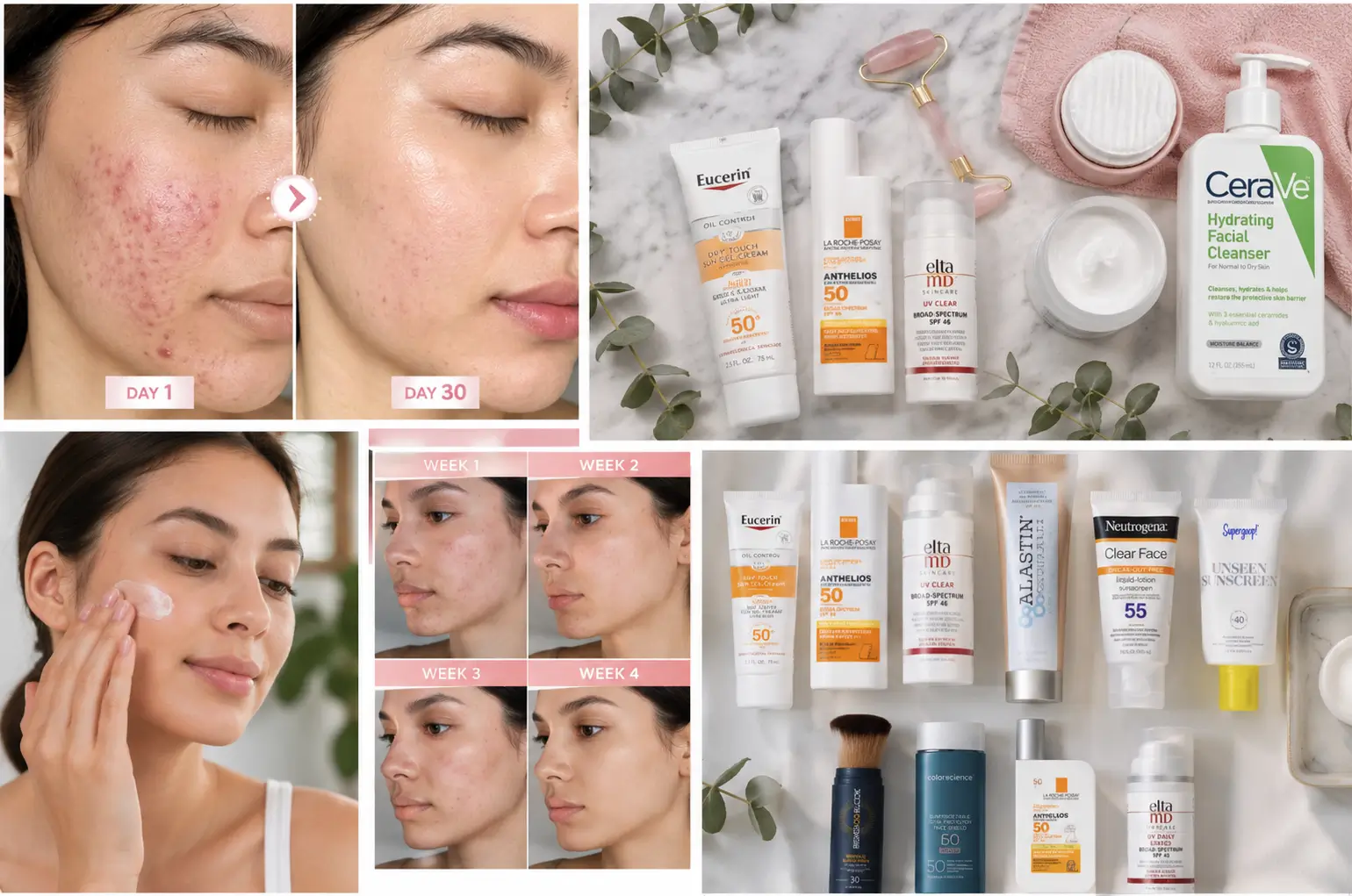
How To Choose The Best Sunscreen For Oily Skin?
Imagine this: It’s 8 AM, you’ve just finished your skincare routine, and your skin looks chef’s kiss perfect. You reach for your sunscreen, apply it confidently, and head out the door. By 10 AM, your face looks like you could fry an egg on it. By noon, you’re breaking out. And By 3 PM, you’re Googling “why does sunscreen hate me?”
If this sounds familiar, you’re not alone.
For years, I skipped sunscreen entirely because every formula I tried turned my oily skin into an oil slick. I’d rather risk sun damage than walk around looking like a glazed donut. Sound familiar?
Here’s the truth I wish someone had told me sooner: It’s not that sunscreen doesn’t work for oily skin—you’ve just been using the wrong one.
The best sunscreen for oily skin exists. In fact, there are dozens of them. You just need to know what to look for. That’s exactly what this guide will teach you.
By the end of this article, you’ll know exactly how to choose the best sunscreen for oily skin—one that protects you from harmful UV rays without clogging your pores or turning your face into a mirror.

What Is the Best Sunscreen for Oily Skin?
Let’s start with the basics. What exactly makes a sunscreen “good” for oily skin?
The best sunscreen for oily skin is a lightweight, non-comedogenic formula that provides broad-spectrum protection (SPF 30-50) without adding excess shine or triggering breakouts Prevention +1.
Unlike traditional sunscreens that feel heavy and greasy, formulas designed for oily skin typically feature:
- Oil-free or gel-based textures that absorb quickly
- Mattifying ingredients like silica, zinc oxide, or niacinamide
- Non-comedogenic formulas that won’t clog pores
- Lightweight filters that don’t sit heavily on the skin
Think of it this way: regular sunscreen is like wearing a winter coat in summer. The best sunscreen for oily skin is like wearing breathable, moisture-wicking activewear instead.

Mineral vs. Chemical: Which Is Better?
This is where it gets interesting.
Mineral sunscreens (containing zinc oxide and titanium dioxide) sit on top of your skin and physically block UV rays. They’re often recommended for oily skin because zinc oxide has mild astringent properties that can help control oil and provide a matte finish.
Chemical sunscreens absorb UV rays and convert them to heat. Many modern chemical formulas are now designed specifically for oily skin with lightweight, gel-based textures that dry down matte Vogue +1.
So which should you choose?
According to dermatologists, both can work beautifully for oily skin—it depends on your specific needs. Mineral formulas are gentler and less likely to irritate acne-prone skin, while chemical formulas often feel more cosmetically elegant and blend invisibly Parade +1.
Why Is the Right Sunscreen Important for Oily Skin?
Here’s something that might surprise you: oily skin needs sunscreen just as much—if not more—than dry skin.
Why? Because oily skin is often acne-prone, and many acne treatments (like retinoids and acids) make your skin more sensitive to sun damage. Without proper protection, you’re looking at:
- Dark spots and hyperpigmentation that take months to fade
- Premature aging from UVA damage (yes, even through windows)
- Worsened acne scars from sun exposure
- Increased risk of skin cancer
But here’s the catch: using the wrong sunscreen can make all these problems worse. Heavy, pore-clogging formulas can trigger breakouts, while greasy textures can exacerbate shine and make your skin look worse throughout the day Thesun.
The solution isn’t skipping sunscreen—it’s finding the right one.
Key Benefits of Using the Best Sunscreen for Oily Skin
Let’s break down exactly what you gain when you find your perfect match:
1. Shine Control Throughout the Day
Quality sunscreens for oily skin contain mattifying agents like silica, dimethicone, or kaolin clay that actively absorb excess oil as you wear them Otsdermatology. Instead of your face getting progressively shinier, you stay matte and fresh-looking.
2. Prevention of Breakouts and Clogged Pores
Non-comedogenic formulas are specifically designed not to clog pores. When you use the right sunscreen, you’re protecting your skin without triggering the cycle of clogged pores → breakouts → dark spots.

3. Protection Against Hyperpigmentation
For oily, acne-prone skin, post-inflammatory hyperpigmentation (those dark marks left after pimples heal) is a major concern. Daily sunscreen use is the #1 thing you can do to prevent these marks from darkening and help them fade faster Usawire.
4. Anti-Aging Benefits Without the Weight
Many mattifying sunscreens now include bonus ingredients like niacinamide and antioxidants. You get sun protection plus skin benefits in one lightweight step Consciouschemist.
5. Makeup Compatibility
The best sunscreens for oily skin double as excellent makeup primers. They create a smooth, matte canvas that helps foundation last longer without sliding off.
How Sunscreen for Oily Skin Works: The Science Simplified
Understanding how these formulas work will make you a smarter shopper. Here’s the breakdown:
Step 1: UV Protection
All sunscreens work by either:
- Blocking UV rays (mineral filters like zinc oxide and titanium dioxide)
- Absorbing UV rays (chemical filters like avobenzone, octinoxate)
For oily skin, the key is choosing filters that don’t require heavy, occlusive bases to work effectively Parade.

Step 2: Oil Absorption
The best formulas include ingredients that actively manage oil production and absorption:
- Niacinamide: Regulates sebum production over time
 Theinkeylist
 - Silica: Absorbs excess oil on contact
- Zinc oxide: Provides mild astringent properties
- Kaolin clay: Draws out oil without drying

Step 3: Lightweight Delivery
Instead of heavy creams, oily skin sunscreens use:
- Gel bases that evaporate quickly
- Fluid textures that spread thinly
- Water-based formulas that hydrate without oil
Step 4: Mattifying Finish
Modern formulas use advanced technology to create a dry-touch finish that doesn’t feel tight or powdery—just naturally matte Prod.
Pros and Cons: Mineral vs. Chemical Sunscreen for Oily Skin
| Feature | Mineral (Physical) Sunscreen | Chemical Sunscreen |
|---|---|---|
| Texture | Can be thicker, may leave white cast | Usually lighter, invisible finish |
| Oil Control | Zinc oxide helps absorb oil | May need added mattifying ingredients |
| Acne-Friendliness | Very gentle, rarely causes breakouts | Some filters can irritate sensitive skin |
| Reapplication | Can be rubbed off more easily | Usually more water-resistant |
| Immediate Protection | Works immediately upon application | Needs 15-20 minutes to activate |
| White Cast | More noticeable, especially on darker skin | Usually invisible on all skin tones |
| Best For | Sensitive, acne-prone, reactive skin | Daily wear under makeup |
Quick Comparison Table: What to Look For
| Your Concern | Look For | Avoid |
|---|---|---|
| Excess shine | Mattifying, oil-free, gel formulas | “Dewy finish,” “hydrating,” rich creams |
| Breakouts | Non-comedogenic, zinc oxide, niacinamide | Coconut oil, heavy waxes, shea butter |
| Under makeup | Lightweight fluid, primer-like texture | Thick, greasy formulas |
| Sensitive skin | Fragrance-free, mineral-only | Fragrance, chemical filters |
| Humid climates | Water-resistant, gel-based | Heavy creams, low water resistance |
Common Mistakes When Choosing Sunscreen for Oily Skin
Avoid these pitfalls that trip up even seasoned skincare enthusiasts:
Mistake #1: Choosing SPF Based Only on the Number
Higher SPF doesn’t always mean better protection for oily skin. SPF 30 blocks 97% of UVB rays, while SPF 50 blocks 98%. The difference is minimal, but SPF 50+ formulas often contain heavier ingredients to achieve that rating Coilylab.
The fix: SPF 30-50 is the sweet spot for daily use on oily skin.
Mistake #2: Ignoring the PA Rating
SPF only measures UVB protection (burning rays). The PA rating measures UVA protection (aging rays). For oily skin concerned with hyperpigmentation and aging, PA+++ or PA++++ is ideal Doctorrogers +1.

Mistake #3: Buying “Moisturizing” Sunscreens
That “rich, hydrating” sunscreen marketed for dry skin? It’s your enemy. Look for labels like “oil-free,” “matte,” or “gel” instead Hadabuddy.
Mistake #4: Not Checking for Comedogenic Ingredients
Ingredients like coconut oil, cocoa butter, isopropyl myristate, and heavy waxes are common in sunscreens—and they’re pore-clogging nightmares for oily skin Coilylab +1.

Mistake #5: Skipping Reapplication Because Your Skin Looks “Fine”
Sunscreen breaks down throughout the day, especially when mixed with oil and sweat. Reapplication every 2 hours is non-negotiable for proper protection Healthline.
Mistake #6: Using Body Sunscreen on Your Face
Facial skin is more delicate and prone to breakouts. Body sunscreens are often too heavy and comedogenic for facial use.
Expert Tips for Choosing and Using Sunscreen on Oily Skin
Tip #1: Look for “Non-Comedogenic” on the Label
This term means the formula is specifically designed not to clog pores. It’s your first line of defense against sunscreen-induced breakouts.
Tip #2: Prioritize Niacinamide
This superstar ingredient does triple duty: it regulates oil production, minimizes pores, and calms inflammation. Sunscreens with niacinamide are gold for oily skin.
Tip #3: Test Texture Before You Commit
If possible, try a sample. The best sunscreen for oily skin should:
- Absorb within 30-60 seconds
- Feel weightless, not filmy
- Leave a natural matte (not chalky) finish
- Not pill or ball up when touched

Tip #4: Consider a Tinted Formula
Tinted mineral sunscreens often blend better into oily skin and provide additional protection against visible light (which can worsen hyperpigmentation).
Tip #5: Don’t Fear Silicones
Dimethicone and other silicones in sunscreens aren’t the enemy—they actually help create a smooth, matte finish and prevent the formula from sliding off oily skin Smartbuy.
Tip #6: Apply to Clean, Dry Skin
Sunscreen applies most evenly on freshly cleansed skin. If you’re super oily, a light dusting of translucent powder before sunscreen can help with longevity.
Tip #7: Use the Right Amount
You need approximately ¼ teaspoon for your face alone. Using too little is the #1 reason people don’t get the protection they think they’re getting.
Frequently Asked Questions (FAQs)
1. Can I skip sunscreen if I have oily skin?
Absolutely not. Oily skin is often more prone to post-acne marks and hyperpigmentation, which worsen with sun exposure. Plus, many acne treatments increase sun sensitivity. Sunscreen is non-negotiable.
2. Will sunscreen make my oily skin worse?
Only if you’re using the wrong formula. Heavy, comedogenic sunscreens can clog pores and increase shine. Look for oil-free, non-comedogenic, gel-based, or mattifying formulas specifically designed for oily skin.
3. What’s the difference between SPF and PA ratings?
SPF measures protection against UVB rays (sunburn). PA measures protection against UVA rays (aging and hyperpigmentation). For oily skin, look for SPF 30-50 with PA+++ or PA++++ for complete protection.
4. Is mineral or chemical sunscreen better for oily skin?
Both can work well. Mineral sunscreens with zinc oxide provide oil absorption and are gentler on acne-prone skin. Chemical sunscreens often feel lighter and work better under makeup. Choose based on your specific needs.
5. Can I use moisturizer with SPF instead of separate sunscreen?
Only if you’re applying enough. Most people don’t use enough moisturizer to get the stated SPF protection. For reliable coverage, use a dedicated sunscreen as your final skincare step Smytten.
6. How do I reapply sunscreen over makeup?
Use a powder sunscreen or SPF setting spray for easy reapplication without disturbing your makeup. Some people also gently blot oil first, then reapply a lightweight fluid formula Smytten.
7. What ingredients should I avoid in sunscreen for oily skin?
Avoid coconut oil, cocoa butter, shea butter in large amounts, heavy waxes, isopropyl myristate, and algae extracts. These are known comedogens that can trigger breakouts.
8. Do I need different sunscreen
Now I have comprehensive information. Let me complete the article with the FAQs and remaining sections.

Final Verdict: Finding Your Perfect Sunscreen
Here’s the truth: the best sunscreen for oily skin isn’t a specific product—it’s the one you’ll actually wear every single day.
After researching dermatologist recommendations, testing countless formulas, and learning from my own mistakes, here’s my balanced verdict:
For most people with oily skin, a lightweight, non-comedogenic SPF 30-50 with a gel or fluid texture works best. Look for added benefits like niacinamide for oil control and zinc oxide for gentle protection.
Mineral formulas are ideal if you’re sensitive or acne-prone. Chemical or hybrid formulas work beautifully if you want invisible protection under makeup.
The “perfect” sunscreen doesn’t exist, but the right sunscreen for you absolutely does. Start with the criteria in this guide, be willing to test a few options, and commit to daily use.
Your future skin will thank you.
Call to Action
Ready to upgrade your sun protection game? Explore more skincare guides, product reviews, and expert tips on VictorZone. Have questions about finding the best sunscreen for oily skin? Drop a comment below—we’d love to hear about your journey and help you find your perfect match!
Don’t forget to bookmark this guide and share it with fellow oily-skin warriors who are still struggling to find their SPF soulmate.
Join 50,000+ people who transformed their skin naturally. Your clear skin is waiting
Discover More Beauty Recommendations From Victorzone About Skin Care
How to Choose The Best Sunscreen for Oily Skin
The Best Face Wash For Acne-Prone Skin Naturally
Does Niacinamide Serum Really Work for Acne? My 30-Day Results
How the Korean Skincare Routine Improved My Skin in Just 30 Days
I Tried The 10-Step Korean Skincare Routine for 30 Days—Here’s What Actually Changed


